The Last Astronomer
The dome hadn't moved in three years. Corrosion had frozen its gears mid-rotation, so it stayed open to a wedge of sky no wider than a barn door, and through that wedge Elias Voss had spent every clear night since the last transport ship left, watching the universe the way a man watches a fire he built himself.
He was eighty-one. He had not counted the exact day in some time.
The observatory sat above the tree line, above the clouds most nights, above the ruins of a road that no one drove anymore because there was no one left to drive it. The solar array on the south ridge still worked, mostly. The old Cassegrain reflector still worked, entirely. That was enough. Elias needed light and a mirror and the patience to sit still, and he had an abundance of all three.
They had asked him to come. Not ordered, asked, gently, the way you ask an old dog to get in the car for its last visit to the vet. There had been a seat for him on the third ship, then the ninth, then the last one anyone bothered to schedule. He had declined each invitation with the same four words: someone has to look.
No one had argued very hard. There were, by then, more pressing things to save than one stubborn astronomer and his stubborn opinions about duty.
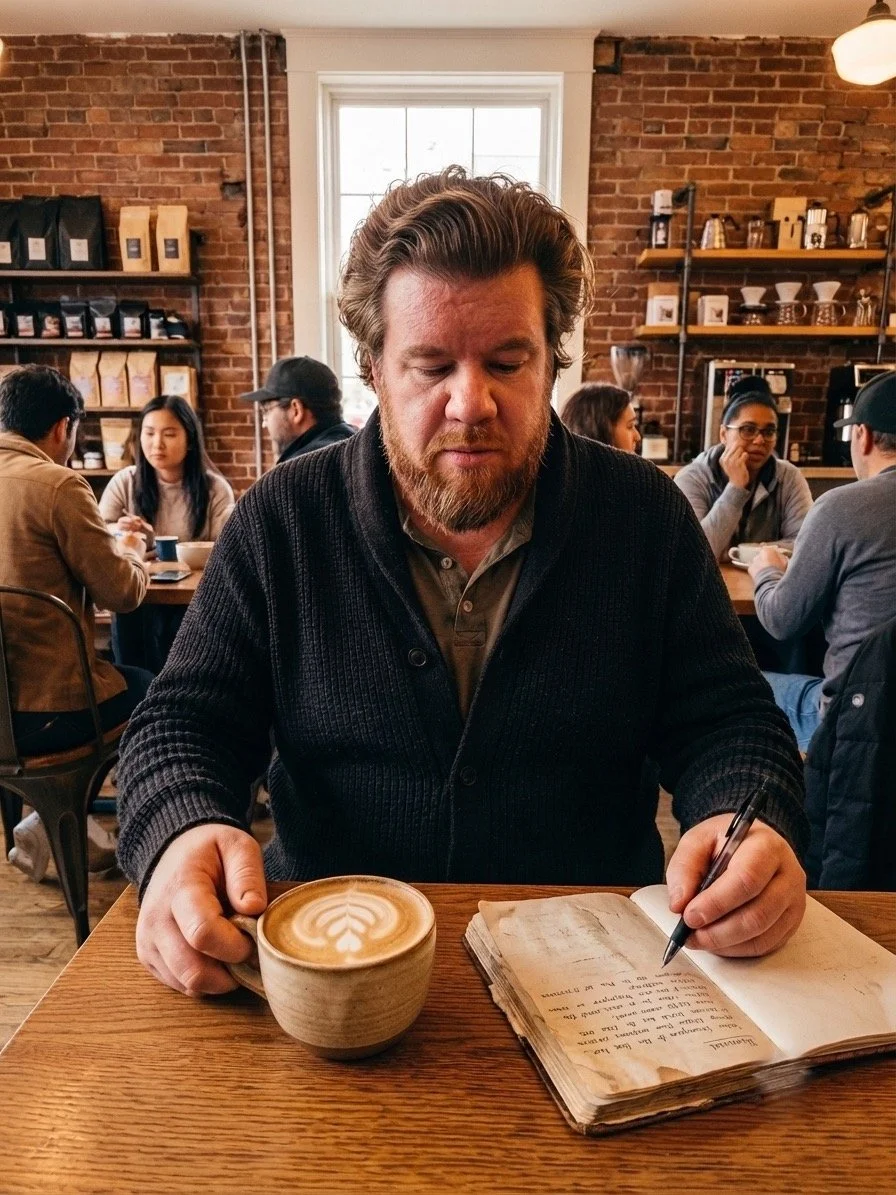
Tonight the seeing was excellent, the air still, the jet stream elsewhere, the kind of night that made the old excitement rise in his chest like something with a pulse of its own. He logged the conditions in a notebook whose pages had gone soft with age and thumbing. He aimed the scope at Cygnus, because Cygnus had always felt like an old friend, its cross of stars a landmark he'd navigated by since he was nineteen years old and certain the sky was the only thing that would never lie to him.
He found Deneb first, the way he always did, using it to walk the rest of the constellation into place.
Deneb was not there.
He blinked, checked the eyepiece, checked his own pulse without meaning to. Recalibrated. Tried again.
Still not there. Not dimmed. Not red-shifted into some faint ember of itself. Simply absent, the way a word is absent from a sentence you've read a hundred times and suddenly cannot find.
He told himself it was the equipment. He told himself it was his eyes, his age, the mirror's coating gone patchy with decades of neglect. He spent forty minutes confirming what he already knew in the part of his mind that had spent sixty years learning to trust data over hope: Deneb, a star whose light had been traveling toward him since before the pyramids were young, was gone.
By midnight, Albireo had followed it. By one, the whole neck of the swan had been plucked clean, and Elias sat in his cold dome with his hands folded in his lap, doing the only thing left that made sense to a scientist confronted with the impossible. He watched.
He did not think, at first, of endings. He thought of catalogs, of every star he'd charted across a career spent cataloging the very light now disappearing star by star, patient as a curtain being drawn. He thought: someone should be recording this.He thought: I am someone. He picked up his pencil, and his hand, for the first time in years, shook badly enough that the notation came out illegible, a scar across the page instead of a number.
By dawn, if it could still be called that, with half of Cygnus gone and Cassiopeia thinning at its western point, he understood, in the unhurried way old men understand mortal things, that this was not a malfunction of instruments or eyes. This was not entropy, which he had spent a lifetime respecting as the universe's slow, patient bookkeeper. Entropy took its time. This was something choosing to be quick.
He sat outside the dome as the light changed, wrapped in the same wool coat he'd worn for twenty winters, and waited for whatever was coming to finish arriving.
It did not come as light, or voice, or any of the forms he might have imagined across a childhood steeped in scripture he'd since set aside. It came as absence made articulate, a silence with the shape of attention, settling over the mountain the way weather settles, except this weather asked questions.
You have watched me for sixty years, it said, not in words exactly, but in something his mind translated into words because words were the only vessel he had. Tell me why.
"Because you're beautiful," he said, and found the answer thin as soon as it left him.
That is not why you kept a ledger.
He thought about that. The ledger, sixty years of it, boxes of notebooks in a storage room three flights below, each page a fist closed around a single fact of light. He had never once, he realized now, looked at a star simply to let it be a star. He had looked to measure it, to place it, to make it his, in the specific, quiet way a cataloger makes the cataloged belong to him.
"Because I wanted to know you," he said, which was closer, and truer, and still not quite it.
The silence did not answer immediately. When it did, the question came without cruelty, which was somehow worse than cruelty would have been.
Why do you think witnessing something means owning it?
He had no answer ready. He had spent a career assuming the two were the same act, that to see clearly was to acquire, that the discipline of observation was itself a kind of quiet conquest, one star, one measurement, one page at a time. He had refused the last ship not out of loyalty to humanity but, he understood now, sitting cold on a dead mountain with the sky unraveling in front of him, out of something he had never once let himself name. He had wanted to be the one who saw it last. The final entry in the ledger, signed with his own name.
"I don't," he said finally, and it came out smaller than he meant it to, an old man's voice admitting an old man's mistake. "I don't own anything up there. I never did."
No, the presence agreed, without triumph. You were only ever a guest who forgot to leave.
"If I was only a guest," he said, and the question surprised him with how much it cost to ask, "what was I supposed to do?"
Look. A pause, unhurried, the way a good teacher waits. And then leave.
He turned that over the way he'd once turned over difficult data, looking for the flaw in it, and found none. Sixty years, and no one had ever told him observation was not the same as belonging. He had thought that loving a thing closely enough, long enough, earned him some claim on it. It did not. It never had. Love, he understood now, had never once asked to be kept.
The last of Cygnus went then, not violently, but the way a held breath finally releases. He did not fight it. He found, in the moment the swan's final star folded into the same waiting dark that had claimed the rest, that he was not afraid, only unburdened, as if he had set down a case he'd carried so long he'd forgotten it had weight.
He closed the notebook. He did not need to write this down. Some things, he understood at last, were never his to record.
The dome stood open to a sky going quietly, patiently blank, and Elias Voss sat beneath it, an old man finally willing to simply look, asking nothing of the dark in return.